The short answer
The iPhone 14 is a polished iPhone 13, same screen and near-identical body, with a meaningfully better main + selfie camera, a slightly faster GPU, Action-mode video, Crash Detection and an hour more battery. For most people the iPhone 13 is the smarter buy because it costs noticeably less and does 90% of what the 14 does. Choose the 14 if low-light photos, selfies or the safety features matter to you.
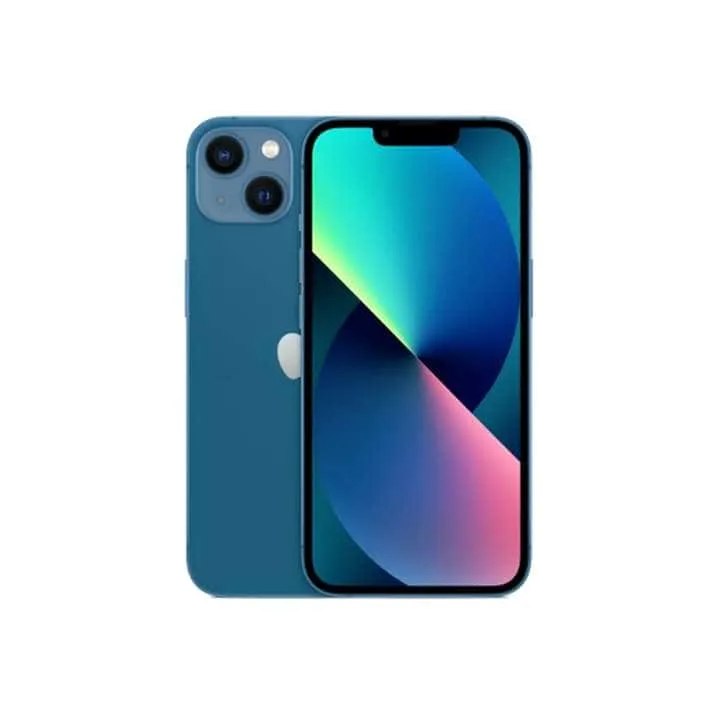
iPhone 13
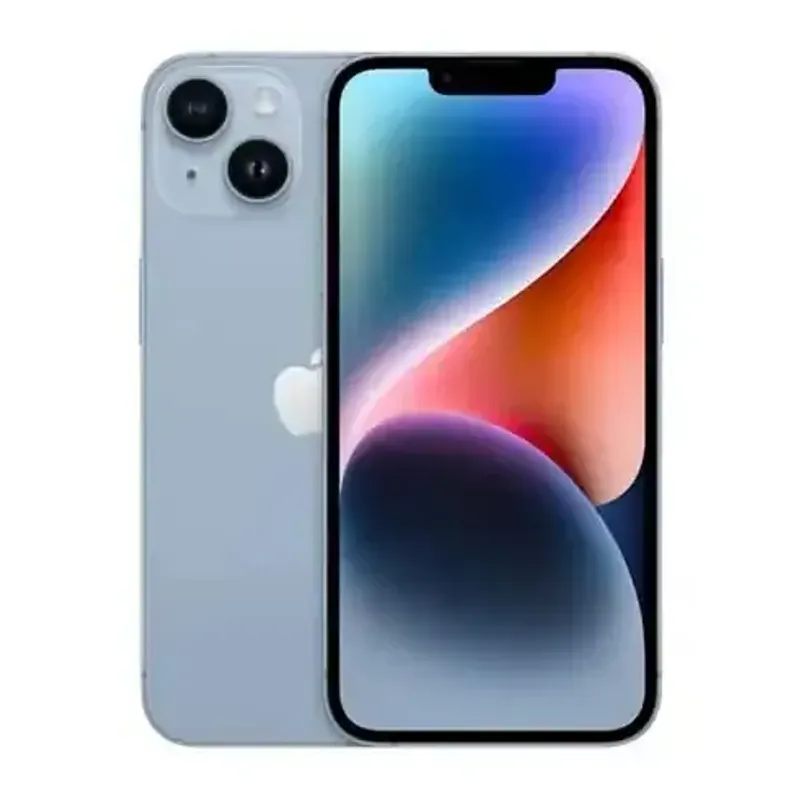
iPhone 14
Full spec comparison
Rows highlighted in blue are where the two phones differ.
| Spec | iPhone 13 | iPhone 14 |
|---|---|---|
| Display | 6.1″ Super Retina XDR OLED | 6.1″ Super Retina XDR OLED |
| Resolution | 2532 × 1170 (460 ppi) | 2532 × 1170 (460 ppi) |
| Refresh rate | 60Hz | 60Hz |
| Peak brightness | 1200 nits (HDR) | 1200 nits (HDR) |
| Chip | A15 Bionic (4-core GPU) | A15 Bionic (5-core GPU) |
| Rear cameras | Dual 12MP, Wide ƒ/1.6 + Ultra Wide ƒ/2.4 | Dual 12MP, Wide ƒ/1.5 + Ultra Wide ƒ/2.4 |
| Main sensor | Sensor-shift OIS | Larger sensor + sensor-shift OIS · Photonic Engine |
| Front camera | 12MP ƒ/2.2 (fixed focus) | 12MP ƒ/1.9 with autofocus |
| Video | 4K up to 60fps · Cinematic mode (1080p) · Dolby Vision | 4K up to 60fps · Cinematic 4K · Action mode · Dolby Vision |
| Battery life | Up to 19 hrs video playback | Up to 20 hrs video playback |
| Charging | Lightning 20W wired · MagSafe 15W · Qi 7.5W | Lightning 20W wired · MagSafe 15W · Qi 7.5W |
| Build | Aluminium frame · Ceramic Shield · IP68 | Aluminium frame · Ceramic Shield · IP68 |
| Dimensions | 146.7 × 71.5 × 7.65 mm | 146.7 × 71.5 × 7.80 mm |
| Weight | 174 g | 172 g |
| Storage | 128 / 256 / 512 GB | 128 / 256 / 512 GB |
| Connectivity | 5G · Wi-Fi 6 · Face ID | 5G · Wi-Fi 6 · Face ID |
| Safety features | Emergency SOS | Crash Detection · Emergency SOS |
| Latest iOS (2026) | iOS 18 | iOS 18 |
| Charge port | Lightning | Lightning |
Category by category
Where each phone wins, and where it genuinely doesn't matter.
Design & size
EvenPractically identical. Both are 6.1″ with the same 146.7 × 71.5 mm footprint; the 14 is a hair thicker (7.80 vs 7.65 mm) and 2 g lighter. Same flat-edge aluminium design, same notch, same Ceramic Shield and IP68 water resistance. If size is your deciding factor, there is effectively no difference between these two.
Display
EvenThe same panel: a 6.1″ Super Retina XDR OLED at 2532 × 1170 (460 ppi), 60Hz, up to 1200 nits in HDR. Neither has the 120Hz ProMotion of the Pro models. No real-world difference here.
Performance
Winner: iPhone 14Both run the A15 Bionic, but the 14 uses the 5-core GPU (the 13 has 4 cores), the same chip Apple put in the iPhone 13 Pro. In daily use they feel identical; the extra GPU core gives the 14 a slight edge in heavy gaming. Both will comfortably run iOS for years to come.
Cameras
Winner: iPhone 14This is the real upgrade. The 14's main camera has a larger, faster ƒ/1.5 sensor plus Apple's Photonic Engine, so low-light shots are cleaner and brighter. The front camera gains autofocus and a faster ƒ/1.9 lens, a clear win for selfies and video calls. The 14 also adds Action mode for smooth, gimbal-like video. If photography matters, the 14 pulls ahead.
Battery & charging
Winner: iPhone 14The 14 squeezes out about an hour more video playback (20 vs 19 hrs). Charging is the same on both: ~20W wired over Lightning, 15W MagSafe. A modest, not dramatic, advantage.
Safety & software
Winner: iPhone 14The 14 adds Crash Detection (auto-calls emergency services after a severe car accident). Both phones run the latest iOS in 2026 and will keep getting updates for years, so longevity is a wash.
Price (Renewed)
Winner: iPhone 13On a Renewed basis the iPhone 13 is the clear value pick, it lands noticeably cheaper than the 14 while delivering nearly the same experience. The 14's camera and safety extras are real, but you pay for them.
Who should buy which?
Buy the iPhone 13 if…
You want the best value, mostly use the phone for everyday tasks, social media and daytime photos, and you'd rather save the difference.
View iPhone 13 →Buy the iPhone 14 if…
You care about low-light and selfie photography, want Action-mode video for stable clips, or value Crash Detection and the small battery/GPU bump.
View iPhone 14 →In plain terms - no specs
iPhone 13 is for you if…
…you want a fast, reliable iPhone that handles everything - calls, apps, photos, social media - without spending more than you need to. It takes great pictures. It's quick. It'll last years. Most people who buy it feel zero need to upgrade. It's the smart buy.
iPhone 14 is for you if…
…you take a lot of photos at night or indoors where the light is bad, or you shoot videos and want them to be steady even when you're moving. It also has a feature that automatically calls emergency services if it detects you've been in a car crash - that's the kind of thing you don't think about until you need it.
Common questions
Is the iPhone 14 worth it over the iPhone 13 in 2026?
For most people, no, the iPhone 13 does almost everything the 14 does for less money. Step up to the 14 only if you specifically want better low-light and selfie photography, Action-mode video, or Crash Detection.
What is the size difference between the iPhone 13 and iPhone 14?
There is essentially none. Both have a 6.1″ display and the same 146.7 × 71.5 mm body. The iPhone 14 is just 0.15 mm thicker and 2 g lighter, differences you can't feel in the hand or notice in a case.
Is the iPhone 14 camera better than the iPhone 13?
Yes. The iPhone 14 has a larger ƒ/1.5 main sensor with Apple's Photonic Engine for cleaner low-light photos, plus an autofocus front camera and Action mode for stabilised video. Day-to-day in good light they look similar, but the 14 is clearly better in low light and for selfies.
Do the iPhone 13 and 14 use the same chip?
Both use the A15 Bionic, but the iPhone 14 has the 5-core GPU version (the 13 has 4 cores). In everyday use they feel the same; the 14 is slightly faster for demanding games.
Are both phones still supported in 2026?
Yes. Both the iPhone 13 and iPhone 14 run the latest iOS in 2026 and are expected to receive software updates for several more years.
Still not sure? We'll help you choose.
Every iPhone we sell is Renewed to like-new condition with a 6-month warranty and free 7-day returns. Message us and we'll recommend the right one for your budget.